
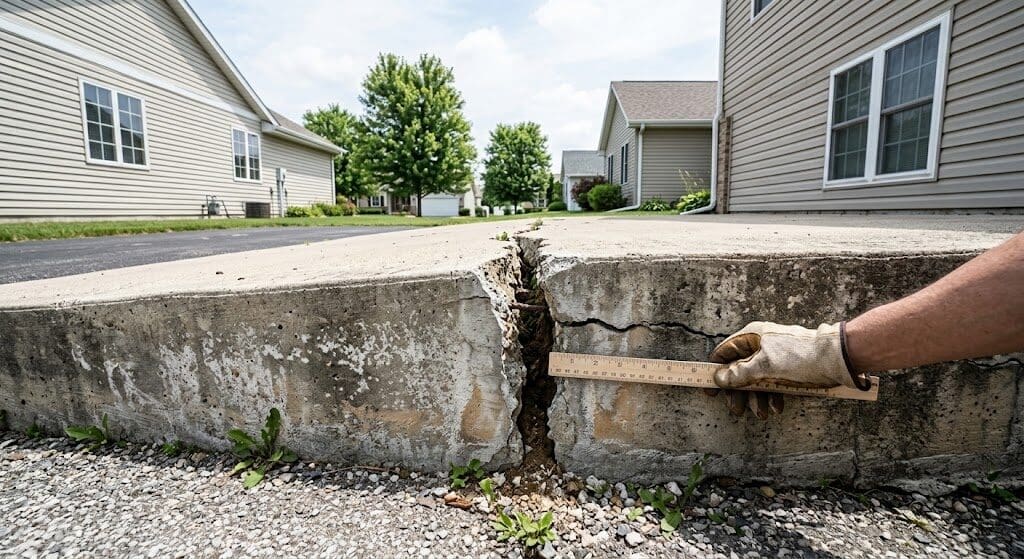
Slab foundation cracks become concerning when they widen, grow, show visible movement, allow water to seep through, or occur with signs such as uneven floors, sticking doors and windows, or additional cracks. Small, stable hairline cracks, however, are often caused by normal concrete shrinkage or minor settlement. To determine whether a crack is serious, look at its size, location, pattern, movement, and whether other parts of the home are showing signs of shifting.
The article will cover the common types and causes of slab cracks, warning signs to watch for, how to inspect and monitor cracks, when professional help is needed, and why simply patching a crack may not fix the underlying problem. It will also provide a quick guide to help homeowners assess the level of concern.
What Is a Slab Foundation?
A slab foundation, also known as a slab-on-grade foundation, is a solid concrete base built directly on or near the ground. Unlike homes with basements or crawl spaces, a house with a slab foundation rests directly on the concrete slab, which is supported by the soil underneath.
Since the slab relies on the ground for stability, changes in the soil can affect the foundation. Soil may expand and contract as moisture levels change, while poorly compacted soil can settle over time. Poor drainage can also affect the conditions beneath and around the slab.
As a result, a crack in the slab may simply be caused by normal concrete movement—or it could indicate an underlying issue with the soil or foundation.
Are Cracks in a Slab Foundation Normal?
Yes, some slab foundation cracks are normal and may not indicate a serious structural problem. Concrete naturally shrinks as it cures, while temperature changes can cause it to expand and contract, creating small cracks.
A thin, stable, isolated crack without water intrusion, shifting, or uneven surfaces is generally less concerning. However, its size, location, pattern, and changes over time should still be monitored.
What Makes a Slab Foundation Crack Concerning?
Not every crack in a slab foundation is a sign of serious damage. However, certain characteristics can indicate active movement or an underlying foundation problem. Here are the key warning signs to watch for:
1. The Crack Is Getting Wider or Longer
A crack that continues to grow, widen, or extend over time may indicate ongoing movement beneath the slab. Monitor its size and take dated photos to determine whether it is changing.
2. There Is Vertical or Horizontal Displacement
If one side of the crack is higher or shifted compared with the other, the slab may be experiencing movement. Visible displacement is more concerning than a simple surface crack and should be professionally evaluated.
3. The Crack Is Wide
The width of a crack can provide a useful warning sign, especially when it is accompanied by other symptoms. Wider or expanding cracks deserve closer inspection to determine whether they are caused by structural movement.
4. The Crack Is Accompanied by Uneven Floors
A crack combined with sloping, sinking, or uneven floors may indicate movement beneath the slab. These changes can suggest that the soil is no longer providing consistent support.
5. Doors and Windows Suddenly Stick
Doors or windows that suddenly become difficult to open or close can sometimes indicate movement in the structure. When this happens alongside new or growing foundation cracks, it is worth having the home inspected.
The most concerning slab cracks are those that change over time or occur alongside other signs of movement. If you notice several of these warning signs, consider having a qualified foundation professional or structural engineer evaluate the problem before attempting repairs.
Pay Attention to the Crack’s Pattern
The shape and direction of a slab crack can provide useful clues about its possible cause. Pay attention to these common patterns:
- Hairline or Random Surface Cracks: Often caused by normal concrete shrinkage or curing.
- Diagonal Cracks: May indicate uneven settlement or structural movement.
- Stair-Step Cracks: Often associated with differential settlement or shifting.
- Horizontal Cracks: May indicate soil pressure or movement, especially in foundation walls.
While crack patterns can offer helpful clues, the location, size, and progression of the crack should also be considered before determining its severity.

Water Coming Through a Slab Crack Is a Warning Sign
Even a small slab crack can be a concern if it allows water to enter the home. Pay attention to the following signs:
- Damp or wet areas
- Water droplets
- Discoloration or staining
- Efflorescence or white mineral deposits
- Moist flooring
- Musty or damp odors
- Water appearing after heavy rain
Water intrusion may result from poor drainage, groundwater, hydrostatic pressure, or moisture passing through the concrete. A leaking slab crack should not be ignored—identify and fix the moisture source rather than simply sealing the crack.
What Causes Slab Foundation Cracks?
Slab foundation cracks can develop for several reasons, ranging from normal concrete movement to problems with the soil or drainage around the home. Understanding the possible causes can help determine whether a crack is minor or requires professional attention.
1. Concrete Shrinkage
Concrete naturally contracts as it dries and cures, which can create small surface cracks. These are often harmless when they remain thin and stable.
2. Soil Settlement
Soil beneath the slab can compress or shift over time, causing sections of the foundation to lose support. This movement may lead to cracking and uneven floors.
3. Expansive Soil
Certain soils expand when wet and shrink when dry, creating movement beneath the slab. Repeated changes in soil volume can place stress on the foundation and cause cracks.
4. Poor Drainage
Water that collects around or beneath the foundation can change soil conditions and contribute to movement. Improper grading, clogged gutters, or poorly positioned downspouts can increase the risk.
5. Improper Site Preparation
Poorly compacted soil or fill beneath a slab can settle unevenly after construction. This loss of support may eventually cause the concrete to crack.
6. Plumbing Leaks
Leaks beneath or near a slab can saturate the surrounding soil and potentially cause settlement or movement. Unexplained moisture, damp spots, or unusually high water usage may be warning signs.
Not all slab cracks have the same cause or level of severity. Identifying the underlying cause is essential because simply repairing the visible crack may not prevent it from returning.
How to Inspect a Slab Crack Yourself
A basic inspection can help you monitor a slab crack and spot potential warning signs. Follow these simple steps:
- Take Photos: Photograph the crack with a size reference and date each photo.
- Measure the Crack: Record its width and check periodically for changes.
- Check for Movement: Look for uneven or shifted edges along the crack.
- Look for Moisture: Check for dampness, stains, or water after heavy rain.
- Inspect the Home: Watch for uneven floors, sticking doors, or new wall cracks.
- Check Exterior Drainage: Look for standing water or poor drainage near the foundation.
Regular monitoring can help you identify changes early. If the crack grows, shifts, leaks, or appears with other warning signs, consider a professional inspection.
When Should You Call a Professional?
While some slab cracks can be safely monitored, certain warning signs indicate that a professional inspection may be necessary. Consider seeking expert help if you notice any of the following:
- The crack continues to widen or extend.
- The two sides of the crack have visibly shifted.
- Water is seeping through the crack.
- Multiple new cracks are developing.
- The floor feels uneven or begins to slope.
- Doors or windows suddenly become difficult to open or close.
- Cracks or separation appear in exterior masonry.
- The foundation appears to be moving, leaning, or bowing.
- A repaired crack keeps reopening.
- You suspect a leak beneath the slab.
- A large crack appears near a load-bearing wall or area.
A structural engineer, foundation specialist, or qualified building professional can examine these signs and determine whether the crack is cosmetic or related to a more serious foundation problem.
When a crack is changing or accompanied by other signs of movement, professional evaluation is the safest approach. Early assessment can help identify the cause and prevent a minor issue from becoming more serious.
When Is a Crack an Emergency?
Most slab foundation cracks do not necessarily mean that a home is in immediate danger. However, cracks that are rapidly worsening or accompanied by significant movement, major displacement, uneven or shifting floors, severe structural damage, or a visibly bowing foundation should be treated as more serious.
If you notice signs of possible structural instability, avoid the affected area and contact a qualified professional for an inspection. Do not attempt a DIY repair until the cause and severity of the problem have been properly assessed.
Don’t Make the Mistake of Simply Filling the Crack
A common mistake homeowners make is sealing or patching a foundation crack before identifying what caused it. While filling the crack can improve its appearance or help prevent water from entering, it may only hide the underlying problem.
The crack could be related to:
- Soil settlement
- Expansive soil movement
- Poor drainage
- Plumbing leaks
- Differential foundation movement
- Structural stress or loading
If the underlying issue remains unresolved, the crack may eventually reopen or worsen. The right repair depends on the cause—minor, stable cracks may only need monitoring or sealing, while active foundation movement may require drainage corrections, soil stabilization, structural repairs, or other professional solutions.
A Simple Slab Crack Decision Guide
Use this quick guide to determine whether a slab crack is likely minor or needs professional attention.
What You Notice |
General Concern |
What You Should Do |
| Thin, hairline crack that remains unchanged | Low | Photograph and monitor it over time. |
| Small, stable crack with no other symptoms | Low to Moderate | Continue monitoring and consider sealing if needed. |
| Crack that is getting wider or longer | Moderate to High | Schedule a professional inspection. |
| Crack with visible displacement | High | Have the foundation evaluated promptly. |
| Water entering through the crack | Moderate to High | Investigate the crack and source of moisture. |
| Crack with uneven or sloping floors | High | Seek a professional foundation assessment. |
| Crack with sticking doors or windows | Moderate to High | Check for other signs of structural movement. |
Cracks that grow, shift, leak, or appear with other warning signs deserve professional attention. Stable, minor cracks can usually be monitored.
The Bottom Line
Slab foundation cracks are not always a cause for concern, but cracks that continue to grow, show movement, allow water in, or occur alongside other signs of foundation problems deserve attention. Looking at the crack’s size, pattern, location, and progression can help you distinguish between normal concrete cracking and potential foundation issues.
Keeping track of changes and addressing warning signs early can help prevent more serious damage. Instead of simply filling a suspicious crack, identify its cause first and seek professional advice when there are signs of ongoing movement or structural problems.