
Commercial pavement endures constant traffic loads from vehicles of various weights and frequencies. The surface layer of asphalt or concrete protects the underlying base and subgrade from water intrusion and environmental stress.
The distinction between surface-level damage and structural failure determines the appropriate intervention method. Patching and resurfacing address cosmetic and shallow issues, while full replacement corrects base and subgrade failures.
A properly constructed asphalt parking lot or access road provides 20 to 25 years of service life under normal conditions. The decision to replace commercial pavement carries significant financial consequences that require careful evaluation of damage extent, age, and underlying structural condition.
Types of Pavement Deterioration
Pavement deterioration follows distinct patterns that signal different underlying causes. Each type of damage points to a specific failure mechanism, which determines whether repair or replacement provides the correct solution.
The inspector identifies the damage pattern and its extent during the initial evaluation. This classification guides the decision between patching, resurfacing, and full replacement.
Surface Cracking
- Longitudinal cracks run parallel to the pavement centerline or joint lines. These cracks typically form at construction joints or reflect movement in the underlying base.
- Transverse cracks extend across the pavement width at regular intervals. These cracks result from thermal contraction and expansion of the asphalt layer.
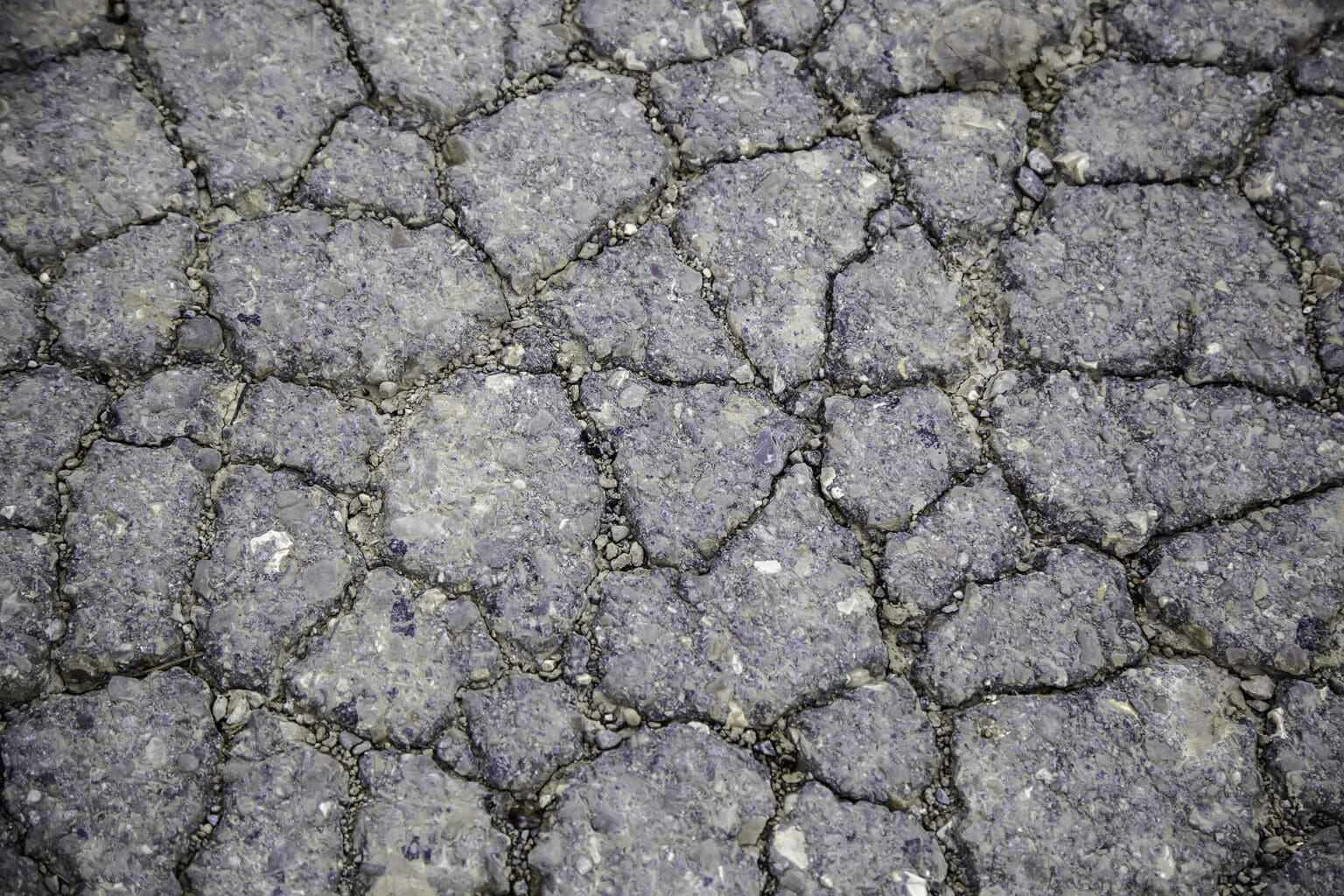
- Block cracking creates interconnected rectangular patterns across the surface. This damage type indicates asphalt aging and loss of flexibility.
Raveling
Raveling describes the progressive loss of aggregate particles from the asphalt surface. The binder material breaks down under traffic and weather exposure.
The pavement surface becomes rough and pitted as the fine aggregate dislodges. Continued raveling leads to deeper material loss and surface roughness that impacts vehicle traction.
Rutting
Rutting produces permanent depressions in the wheel paths of the pavement surface. These channels form when the asphalt layer or subgrade fails under repeated traffic loading.
Ruts deeper than one inch indicate structural failure in the pavement layers. The depressions collect water and accelerate further deterioration.
Fatigue Cracking
Fatigue cracking produces the interconnected pattern of cracks known as alligator cracking. This pattern forms when the pavement structure fails under repeated traffic loads.
The cracks interconnect and create small pieces of pavement that move independently. This damage type signals base failure and requires full-depth replacement.
Potholes
Potholes form when the pavement surface breaks apart and material dislodges from the base. The hole deepens and expands as traffic dislodges additional material.
Isolated potholes can be patched individually. Widespread pothole formation indicates base failure that requires full replacement.
The Pavement Condition Index (PCI) and Structural Assessment
The Pavement Condition Index (PCI) provides the industry-standard numerical score for evaluating asphalt pavement condition. This index ranges from 0 to 100, with higher scores indicating better condition.
The PCI score is calculated through a systematic visual inspection of distress types, severity levels, and extent. This assessment uses standardized ASTM D6433 procedures that ensure consistent evaluation across different inspectors.
PCI Score Ranges
- Pavement with a PCI score of 70 to 100 requires only routine maintenance. Crack sealing and sealcoating preserve the surface condition at this level.
- Scores between 40 and 70 indicate that rehabilitation is needed to extend service life. Mill and overlay or partial-depth patching are appropriate interventions.
- Scores below 40 trigger the requirement for full-depth replacement. The pavement structure has reached the point where repairs cannot restore adequate service life.
Structural Base Failure Assessment
The inspector evaluates the base course condition through core sampling and visual observation. Base failure occurs when the aggregate layer loses its load-bearing capacity.
Failed base material appears as crushed, saturated, or displaced aggregate in the cores. This condition requires full removal and replacement of the base and surface layers.
Life-Cycle Cost Analysis
Life-cycle cost analysis compares the total expense of repair options against full replacement. The analysis includes initial costs, maintenance expenses, and remaining service life for each option.
The lowest life-cycle cost option guides the final decision. A more expensive replacement often delivers the lowest total cost over 20 to 25 years.
Professional Engineering Evaluation
A qualified pavement engineer performs the PCI assessment and structural evaluation. The engineer provides a written report with a recommended intervention method.
The report serves as the basis for budget planning and contractor selection. This documentation also protects the property owner against claims of premature replacement.
Age-Based Indicators for Replacement
The age of commercial pavement provides a reliable baseline for predicting its remaining service life. The deterioration rate accelerates as the pavement approaches the end of its design lifespan.
Age serves as a secondary indicator rather than a standalone decision factor. Pavement condition and maintenance history carry more weight than calendar age alone.
Under 10 Years
Pavement under ten years old should show minimal deterioration under normal conditions. Extensive damage at this age indicates construction defects, poor materials, or subgrade failure.
Repair remains the appropriate response for most issues in this age range. Replacement addresses only catastrophic failures where the original installation was defective.
10 to 15 Years
The 10- to 15-year window provides the ideal timeframe for resurfacing when the base remains sound. A mill and overlay at this age extends pavement life for another 8 to 12 years.
The decision between resurfacing and replacement depends on the base condition. Core sampling verifies whether the underlying structure can support a new surface.
15 to 20 Years
Pavement in the 15- to 20-year range requires careful evaluation of damage extent versus replacement value. Surface-level damage typically has accumulated to significant levels by this age.
The pavement owner weighs the cost of resurfacing against the remaining life expectancy. Replacement often becomes the more cost-effective option when significant damage exists.
Over 20 Years
Pavement exceeding 20 years of age requires replacement when significant damage is present. The remaining service life does not justify the cost of resurfacing alone.
Full replacement resets the pavement to a new 20- to 25-year service life. The new installation includes updated drainage and base specifications that improve performance.
Maintenance History Adjustment
Well-maintained pavement lasts longer than the average 20- to 25-year lifespan. Regular sealcoating and crack sealing extend the service life by 3 to 5 years.
Poorly maintained pavement requires replacement earlier than the age-based averages. The lack of maintenance accelerates deterioration and reduces total service life.
Critical Signs That Indicate Full Replacement
Certain damage patterns signal structural failure that cannot be corrected through resurfacing or patching. These signs indicate that the pavement base or subgrade has failed and requires full-depth replacement.
The property owner should recognize these indicators and request a professional evaluation immediately. Delayed action on structural failures increases repair costs and creates liability hazards.
Alligator Cracking with Distortion
Alligator cracking alone indicates base fatigue, but the presence of distortion or pumping confirms structural failure. Pumping occurs when water and fine material eject through the cracks under traffic loads.
The movement of material through the cracks indicates base saturation and loss of support. This condition cannot be corrected with an overlay because the new surface simply cracks along the same failure lines.
Deep Rutting and Channeling
Rutting deeper than one inch in the wheel paths indicates permanent deformation of the subgrade. The repeated traffic loads have compressed the soil beneath the pavement structure.
Channeling creates depressions that collect water and accelerate further deterioration. The structural weakness extends below the asphalt layer and requires complete reconstruction.
Widespread Potholes
Clustered potholes across large sections of the pavement signal base failure rather than isolated surface damage. The potholes appear in multiple locations because the base has lost its load-bearing capacity.
Individual pothole patching fails quickly in areas with widespread failures. The new patches break apart because the underlying support structure remains inadequate.
Repeated Failures After Repairs
Patched areas that fail repeatedly within months of repair indicate underlying structural issues. The base material continues to fail despite surface-level corrections.
The repeated failure pattern points to drainage problems, subgrade instability, or inadequate base thickness. These conditions require full-depth removal and reconstruction to correct.
Upheaval and Frost Boils
Upheaval occurs when frozen moisture in the subgrade expands and lifts the pavement surface. The pavement buckles and creates trip hazards and drainage problems.
Frost boils appear as soft, wet areas in the pavement during spring thaw. These conditions indicate poor drainage and frost-susceptible soils that require replacement with proper base materials.
Structural vs. Surface Damage
The distinction between structural and surface damage determines the appropriate intervention method. Surface damage affects only the top layer of asphalt, while structural damage extends into the base and subgrade.
The inspector uses core sampling and visual indicators to differentiate between these two damage types. This classification drives the decision between resurfacing and full replacement.
Surface-Level Issues
Surface-level damage includes wear from traffic abrasion, minor cracking, and oxidation from UV exposure. These issues affect the top inch or two of the asphalt layer without compromising the underlying structure.
Faded striping, surface roughness, and shallow raveling fall into this category. Resurfacing or sealcoating addresses these issues without structural intervention.
Structural Issues
Structural damage affects the base course, subgrade, or both layers beneath the asphalt surface. Base failure occurs when the aggregate layer loses its load-bearing capacity or drainage ability.
Subgrade saturation weakens the soil that supports the entire pavement structure. These conditions require full-depth replacement to correct.
Reflective Cracking
Reflective cracking appears in new overlays when cracks from the old pavement surface transmit through the new layer. The underlying cracks continue to move and expand, which breaks the new surface.
The presence of reflective cracking indicates structural movement that resurfacing cannot address. The new overlay fails because the base continues to shift and settle.
Core Sampling Verification
Core samples extracted from the pavement reveal the condition of each layer. The cores show whether the base remains intact or has broken down into smaller fragments.
The moisture content of the core indicates whether water has infiltrated the base. Saturated cores confirm drainage failure that requires replacement.
Load-Bearing Capacity
Structural damage reduces the pavement’s ability to support design traffic loads. The asphalt layer flexes under traffic and develops fatigue cracks from excessive movement.
The reduced load-bearing capacity creates safety hazards and accelerates future damage. Replacement restores the structural capacity to the original design specifications.
Conclusion
The decision to replace commercial pavement depends on a systematic evaluation of distress types, structural condition, and life-cycle cost analysis. Surface-level damage like raveling and minor cracking responds to patching and sealcoating, while structural failures like alligator cracking, deep rutting, and base saturation require full-depth replacement.
The Pavement Condition Index provides the standardized scoring system that guides this decision, with scores below 40 triggering full replacement. Age serves as a secondary indicator, with pavement over 20 years old typically requiring replacement when significant damage appears.
Deferred maintenance creates a compounding financial burden that increases repair costs at a 3:1 to 5:1 ratio over time. A proactive maintenance program with annual crack sealing and sealcoating extends pavement life and reduces the total cost of ownership compared to delayed intervention.